Same wheel, same edge
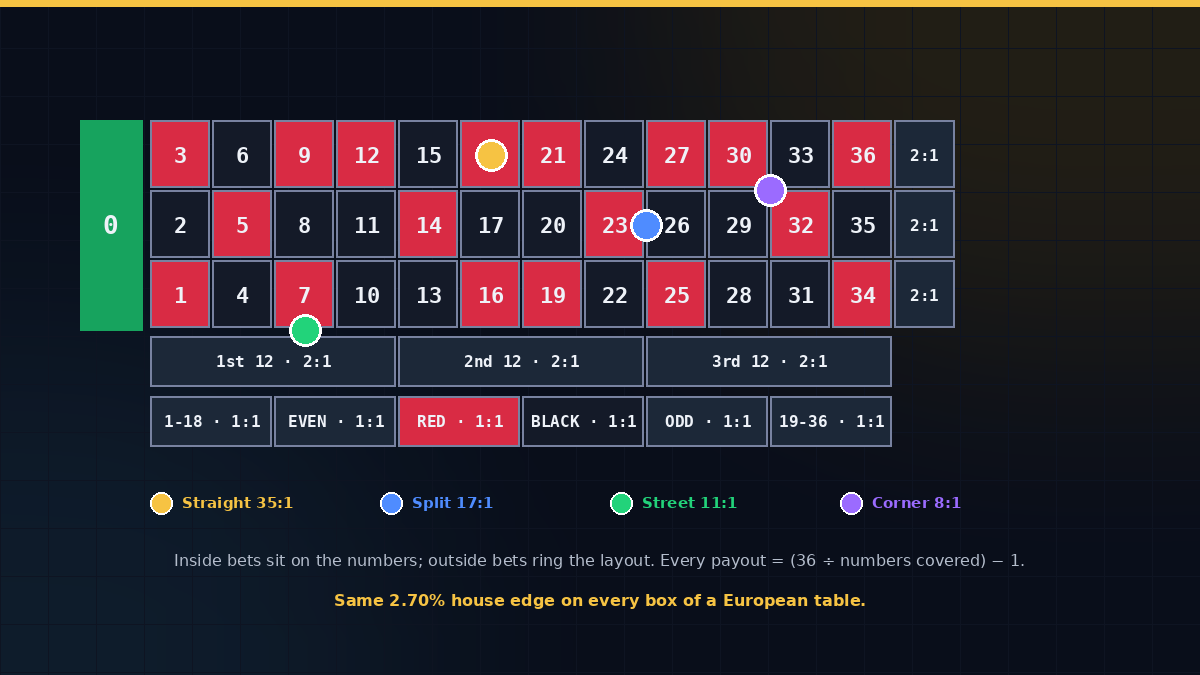
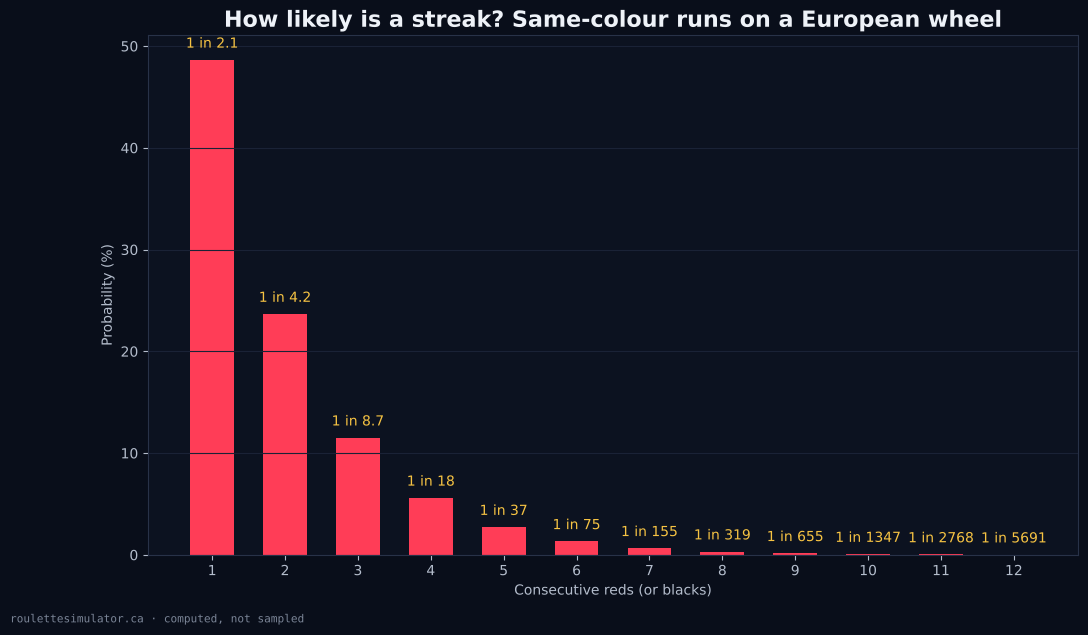
An RNG European table and a live European table both have 37 pockets and pay 35:1 on a straight bet. The house edge is 2.70% in both. A live table uses a physical wheel in a studio (Evolution's are in Riga and Vancouver, among others); an RNG table draws a number from a certified random generator and animates a wheel to match. Neither can be "hot" or "due".
Spins per hour: the hidden multiplier
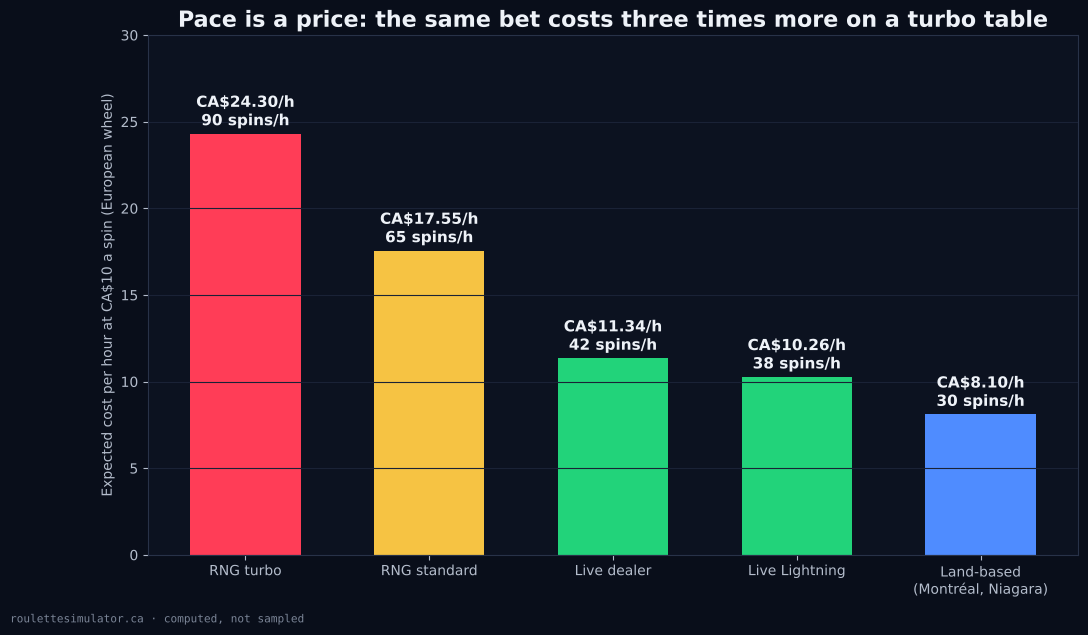
Expected cost is edge × stake × spins. A standard RNG table runs 60–70 spins an hour if you bet steadily; turbo mode pushes it past 90. A live table, with betting windows and a real ball, runs 35–45. At CA$10 a spin the hourly cost on European is about CA$24 on a turbo table and CA$11 on a live one. The bankroll calculator has a spins-per-hour field for exactly this reason.
Minimums and maximums
RNG tables at the casinos in our table accept CA$0.10–CA$0.50 minimums and cap around CA$5,000 on a straight bet. Live tables start at CA$0.50–CA$1 (Evolution's low-limit Auto-Roulette at CA$0.20) and go to CA$10,000+ on VIP tables. Live Lightning adds a 29:1 straight payout to fund multipliers, which raises the straight-bet edge to 2.99%.
Trust: RNG certification vs a camera
Live roulette's appeal is that you watch the ball. RNG roulette's answer is certification (iTech Labs, GLI, BMM) and, at crypto casinos, provably fair seeds you can verify after each spin — Roobet, Stake and Gamdom publish them for their house tables. Étienne's 200-spin checks on this site's bonus pages compare each table's observed return with its published RTP; none has fallen outside normal variance.
Which to choose, by player type
If you play for an hour and want the lowest cost, live: fewer spins. If you want to practise a layout or test bet sizing quickly, RNG at small stakes — or the free demos here, which cost nothing. If you want French rules, check the table name: live "French" tables with la partage exist at Shuffle and Stake. If you want company, live. The edge does not care either way.