Step 1: a FINTRAC-registered exchange
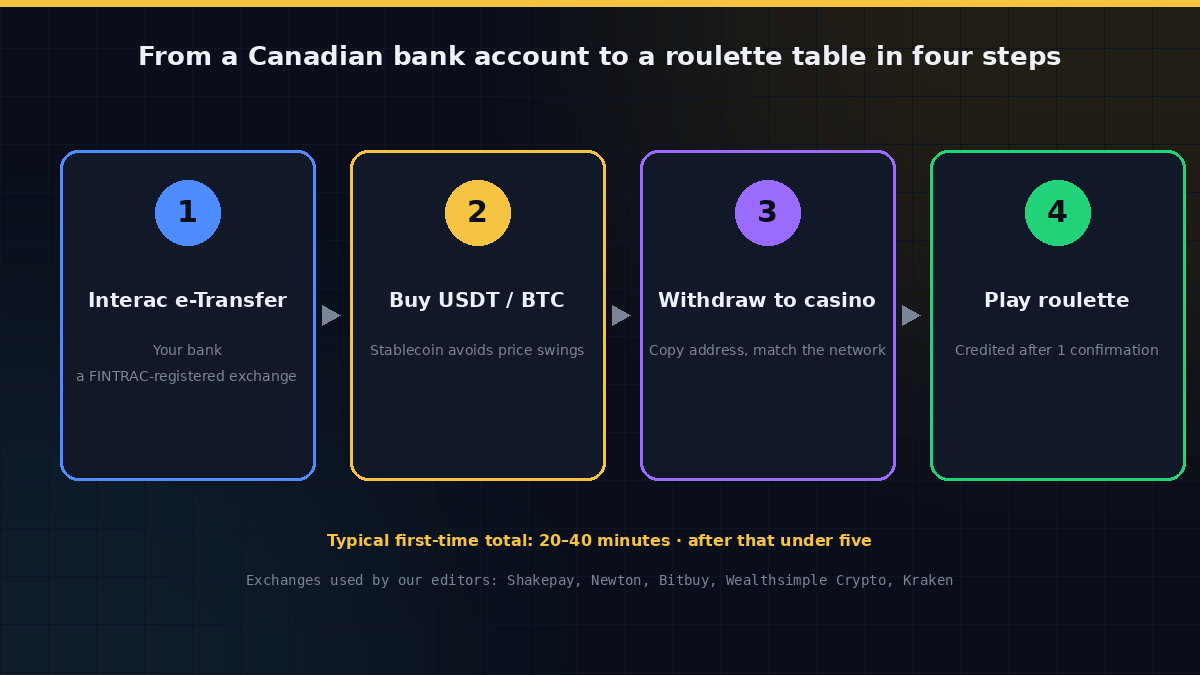
Open an account at a Canadian exchange registered with FINTRAC as a money services business: Shakepay, Newton, Bitbuy, Wealthsimple Crypto or Kraken all qualify and all accept Canadian government ID for verification. Verification takes minutes to a day. Megan uses Shakepay for speed and Kraken for lower fees on larger amounts.
Step 2: Interac e-Transfer in
Send CA$ from your bank by Interac e-Transfer to the exchange. Most credit within minutes; some banks hold a first transfer for an hour. Daily Interac limits are set by your bank, typically CA$3,000, and the exchange may add its own first-week limit. There is no fee from the exchange on Interac deposits at the five named above.
Step 3: buy a stablecoin
Buy USDT or USDC rather than Bitcoin if you want the amount you deposit to equal the amount that arrives. Bitcoin and Ethereum work at every casino in our table but can move 2–5% between purchase and arrival. Check the casino's cashier first for which network it accepts — USDT on TRC-20 (Tron) is the cheapest to send at under CA$1; ERC-20 on Ethereum can cost CA$5–CA$15.
Step 4: withdraw to the casino
In the casino's cashier, choose the coin and network, copy the deposit address, paste it into the exchange's withdrawal form and confirm with 2FA. Most casinos credit after one network confirmation — one to five minutes on Tron, ten on Bitcoin. Send a small test amount the first time. Shuffle, BC.Game and Stake display a CA$ equivalent in the cashier, which helps with bonus minimums.
Fees, limits and timing
Typical all-in cost for a CA$200 deposit: CA$0 Interac, CA$1–CA$4 exchange spread, under CA$1 network fee on Tron. First-time total about 30 minutes including verification; afterwards five minutes. Withdrawals reverse the route; the casinos in our table took 3–14 minutes to send in Megan's tests, and the exchange converts back to CA$ and e-Transfers to your bank, usually same day.
Withdrawing back to CA$ — and taxes
For a recreational player, gambling wins are windfalls and not taxable in Canada. The crypto itself is property: if the USDT you withdraw is worth more in CA$ than what you paid for the USDT you deposited, that difference is a capital gain. With stablecoins it is usually pennies; with Bitcoin it can be meaningful. Keep the exchange's transaction history; it has everything an accountant needs. The house-edge guide covers what else is worth recording.